



 331 476

institution and examined the significance of change in risk
status from diagnosis as a predictor of adverse pathology
among those receiving surgical treatment. In multivariable
models composed of men ultimately treated with RP, the
magnitude of risk change (CAPRA) from baseline was
significantly associated with high-grade and/or non–organ-
confined disease. Notable limitations of this analysis
include noncontrolled decisions to pursue definitive treat-
ment and the use of multiple genitourinary pathologists,
reflecting the longitudinal nature of the surveillance cohort
.
To our knowledge, no other multivariable risk prediction
tool has similarly been evaluated following a period of
surveillance and suggests that risk stratification may be
valuable following repeated clinical assessments. Such an
approach may be meaningful for men experiencing
reclassification of Gleason grade or PSA status alone and
in whom clinical risk assessment may offer more compre-
hensive insight into an individual’s broader status. These
findings indicate that gradations of change in clinical risk
occur over time and suggest that the magnitude of risk
change, rather than unifactorial reclassification thresholds,
may better inform triggers for intervention during AS.
Author contributions:
Michael S. Leapman had full access to all the data
in the study and takes responsibility for the integrity of the data and the
accuracy of the data analysis.
Study concept and design:
Leapman, Ameli, Shinohara, Cooperberg,
Carroll.
Acquisition of data:
Leapman, Ameli.
Analysis and interpretation of data:
Leapman, Chu, Hussein.
Drafting of the manuscript:
Leapman, Cooperberg, Carroll.
Critical revision of the manuscript for important intellectual content:
Leapman, Cooperberg, Carroll.
Statistical analysis:
Ameli, Cooperberg.
Obtaining funding:
Carroll.
Administrative, technical, or material support:
Carroll.
Supervision:
Carroll, Cooperberg.
Other (specify):
None.
Financial disclosures:
Michael S. Leapman certifies that all conflicts of
interest, including specific financial interests and relationships and
affiliations relevant to the subject matter or materials discussed in the
manuscript (eg, employment/affiliation, grants or funding, consultan-
cies, honoraria, stock ownership or options, expert testimony, royalties,
or patents filed, received, or pending), are the following: None.
Funding/Support and role of the sponsor:
This work is supported by the
US Department of Defense Prostate Cancer Research Program
(W81XWH-13-2-0074 and W81XWH-11-1-0489) and the Goldberg –
Benioff Program in Translational Cancer Biology.
Acknowledgments:
This research was presented at the 2015 American
Urological Association National Meeting in New Orleans, LA.
Appendix A. Supplementary data
Supplementary data associated with this article can be
found, in the online version, at
http://dx.doi.org/10.1016/j. eururo.2016.04.021.
[(Fig._1)TD$FIG]
33.3%
Gleason 13.2%
9% Gleason
and %
Pos
5.7%
%Pos 3.9%
11.4% Gleason
and PSA
2.2% %Pos and PSA
PSA 21.2%
0
50
100
150
200
250
300
No change in any
parameters
Change in 3 parameters
Change in 2 parameters
Change in 1 parameter
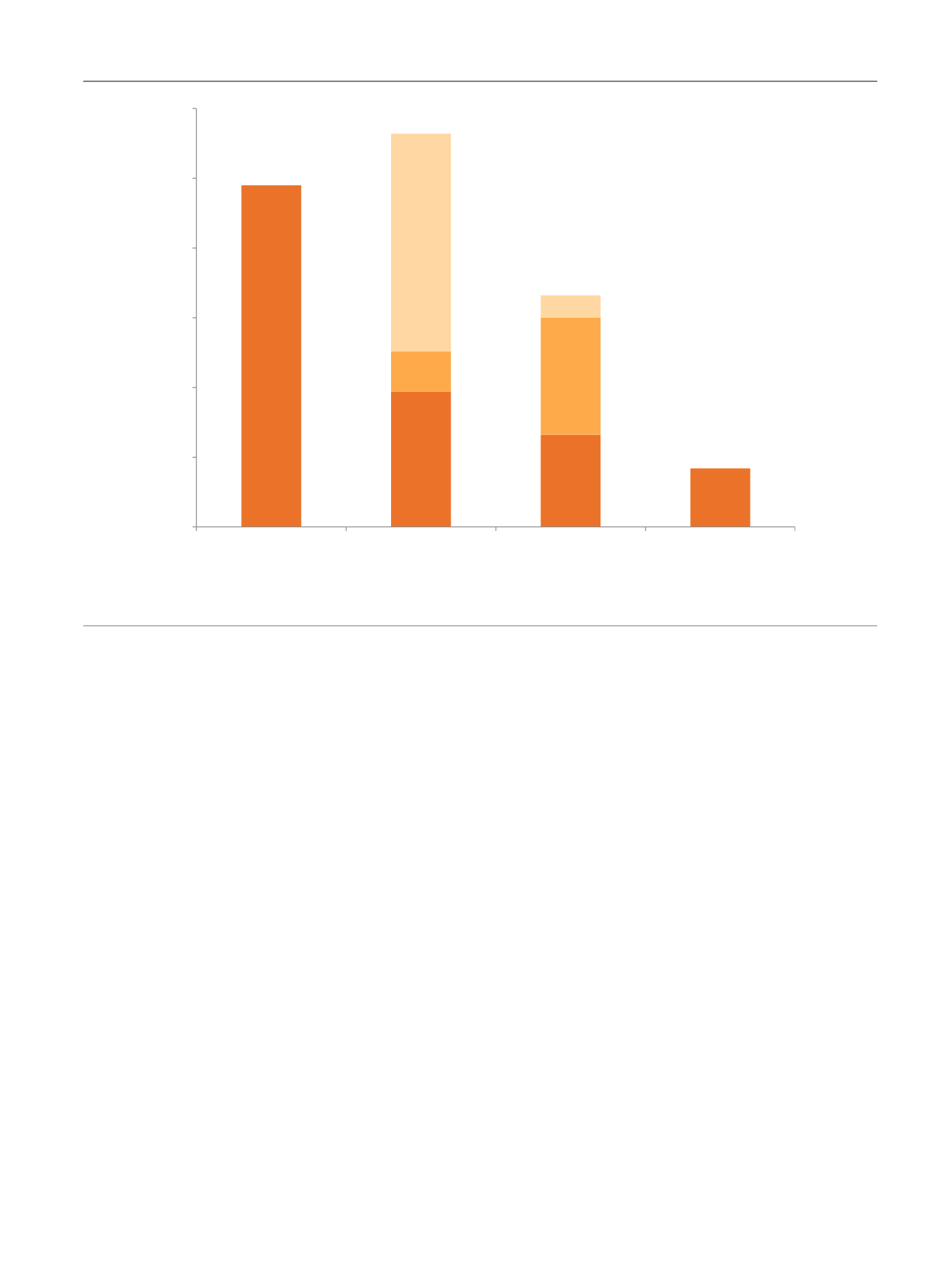
Fig. 1 – Relative frequency of variables reclassified over time among men on active surveillance.
%Pos = percentage of positive biopsy cores; PSA = prostate-specific antigen.
E U R O P E A N U R O L O G Y 7 2 ( 2 0 1 7 ) 3 2 9 – 3 3 2
331